Of the major classic Punjabi tragic love stories (Heer-Ranjha, Sassi-Punnu, Sohni-Mahiwal, and Mirza-Sahiba), the Mirza Sahiba story stands out as unique. While all those stories are tragedies, in the retellings of the Mirza Sahiba story, Sahiba is typically villainized, and positioned as a betrayer.
What is the story of Mirza Sahiba?
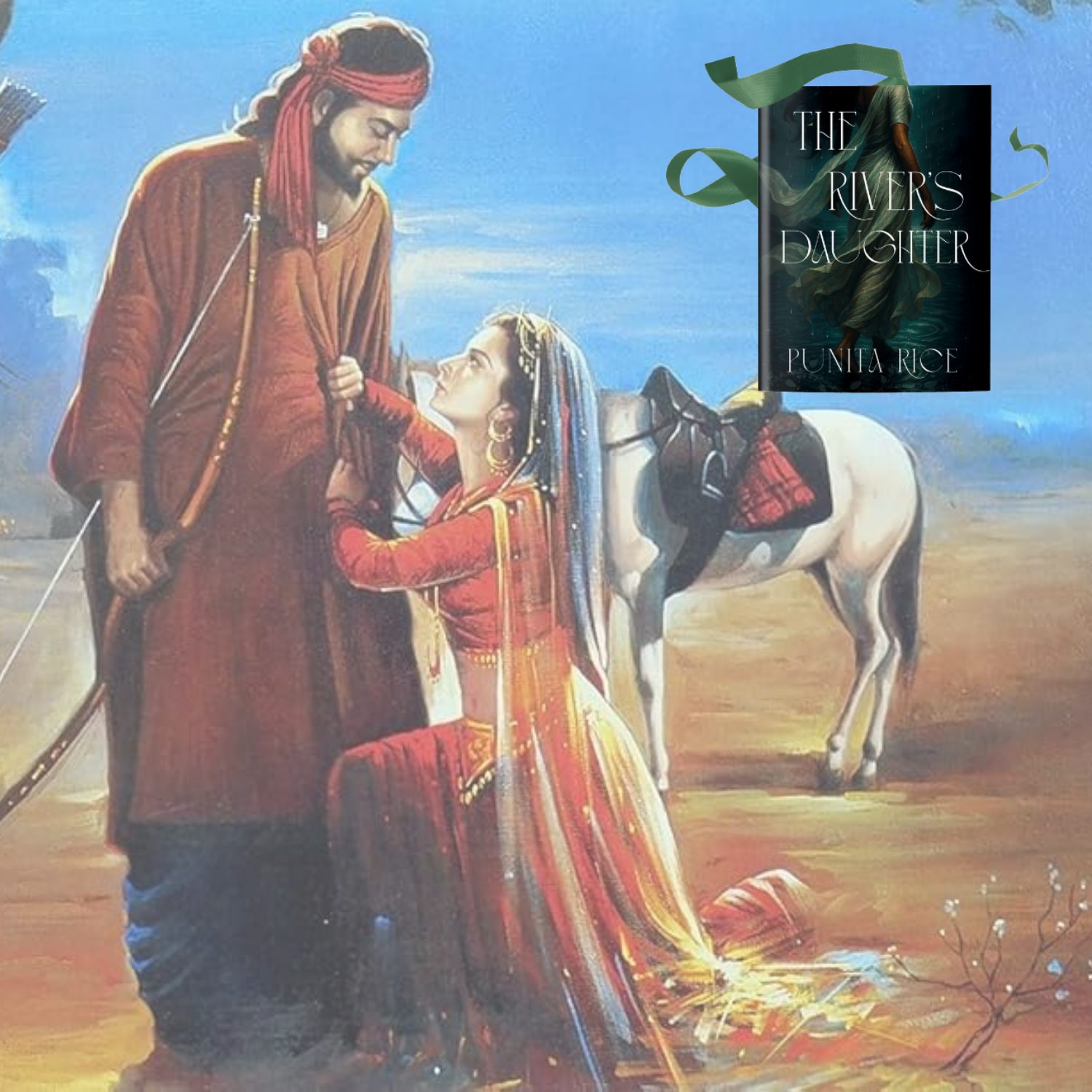
Sahiba and Mirza were childhood playmates (milk-siblings in some variations; actual cousins in others) who grew up together, and eventually grew to love one another. But rather than allow them to get married, Sahiba’s family wanted her to marry someone else (Tahar Khan).
In most versions of the story, Mirza spent the entire night before Sahiba’s wedding riding his horse, Bakki, all the way to Sahiba’s village to run away with Sahiba.
Sahiba ran with Mirza, and they stopped to rest under a tree, and Mirza rested. While he slept, Sahiba began to worry that her brothers might find them.

And so, Sahiba broke all of Mirza’s arrows.
Mirza was a skilled archer, and Sahiba worried that if he had his arrows intact, if/when her brothers found them, he would kill them all before anyone had the chance to talk anything through.
But it wasn’t a well-thought out plan. The brothers did find them, and Mirza, unarmed, was unable to defend himself. The brothers killed Mirza immediately, and Sahiba, torn with grief, killed herself.
But I think framing the story as a tragedy because of Sahiba’s actions misses the mark.
Don’t blame Sahiba
Sahiba did what she did because she didn’t want her brothers’ blood on her beloved hands. And she was, frankly, faced with exclusively bad choices:
- Run away with Mirza, hope for the best → her brothers find them, Mirza kills them → Tragedy
- Run away with Mirza, hope for the best → her brothers find them, they all kill one another → Tragedy
- Run away with Mirza, break his arrows so he doesn’t kill her brothers → her brothers find them, kill Mirza + Sahiba kills herself → Tragedy
- Marry Tahar Khan → Mirza shows up and possibly kills Tahar Khan? → Tragedy
None of these are good options.
This is why the villifying of Sahiba confuses me.
Sahiba’s brothers literally killed Mirza (bad guys). Given the right circumstances, Mirza might himself have opted to kill Sahiba’s brothers or Tahar Khan (making him the bad guy).
Even if Sahiba married Tahar Khan and Mirza didn’t come kill him, Sahiba is now stuck married to Tahar Khan. That’s the outcome we’d be rooting for? That’s the conclusion of Mirza and Sahiba’s epic love story?
Mirza and Sahiba were victims of the time, the society, that era’s obsession with izzat / ijjat (honor), and of circumstance.
The retellings
The story of Mirza Sahiba is a beautiful, poignant, memorable, tragic love story that’s part of a rich oral storytelling tradition in Punjabi history. Over the past few hundred years, the Mirza Sahiba story has been told and retold and tweaked, and adapted into multiple movies and has inspired countless songs.
Each retelling offers a slightly different perspective on the story. (Side note: If you’re looking for a great written retelling of Mirza Sahiba, I recommend “Epic Story of Mirza Sahiban” by Dr. Amjad Ali Bhatti.)
One of the first songs/videos I ever saw about the Mirza Sahiba story was the Harbhajan Mann song “Mirza Sahiba” (which absolutely frames Sahiba’s actions as the problem). My favorite song on the topic so far is Intense / Simiran Kaur Dhadli’s 2019 song “Sahiba” which tells the story from Sahiba’s perspective (embedded below).

The more I thought about the story of Mirza Sahiba, the more I found myself wondering not just about alternate endings, but an entirely alternate reality to contextualize the story.
What if the Mirza Sahiba story didn’t end in (complete) tragedy? What if there were a silver lining? What if there was a different perspective on Sahiba?
A new version of the Mirza Sahiba story
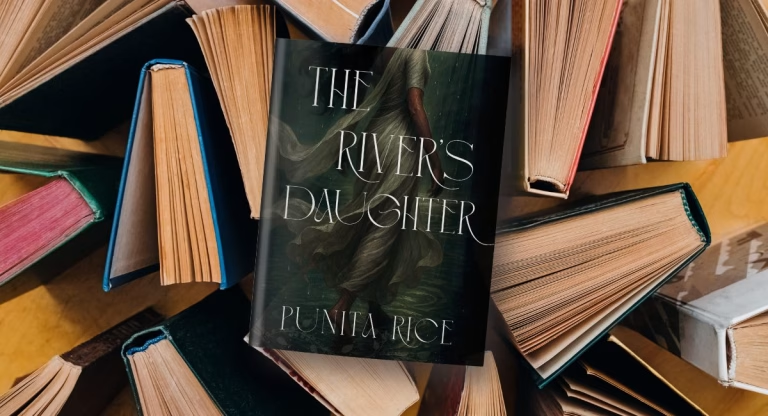
Fast forward to two days ago on July 15, 2025, my novel The River’s Daughter came out.
The main character of The River’s Daughter, Sahira, is not a Sahiba insertion, but her character is an echo of the Sahiba character (in many ways). The novel is somewhere between a reimagining of the original Mirza Sahiba story, and a sequel.

The story follows 19-year-old Sahira Raazaan, who lives in the repressive, dystopian, patriarchal town of Jaraan, where women and girls’ every action is governed by the Covenant of Stillness.
Stillness is sacred, desire is forbidden, and the river that runs through the valley remembers everything.
As Sahira’s wedding draws closer, she begins to uncover a hidden power within herself – one tied to the river’s memory, her mother’s disappearance, and a forbidden connection to a man who should never have entered her life.
Full disclosure, The River’s Daughter is not just a Mirza Sahiba retelling/sequel. It’s also…
- A coming of age story
- A story about forbidden love
- A story about hard choices
- A story about self-acceptance
- A story about intergenerational pain
- A story about finding your voice
- A story about river magic
- A story about resistance to repressive society
- A story about quiet rebellion
- A story about ancestral memory
…but if you liked the story of Mirza Sahiba, you might love Sahira’s story. You buy The River’s Daughter on Amazon (also available for Kindle Unlimited) or buy it anywhere books are sold.
You can also order a signed hardcover of The River’s Daughter here or read more about the book here.
More homework:
If you’re interested, you can watch the 1947 Mirza Sahiba movie on YouTube.
– Punita